Virginia Home Grown
Seed Starting
Clip: Season 26 Episode 4 | 6m 10sVideo has Closed Captions
Get tips for growing plants from seed
Randy Battle and Peggy Singlemann plant vegetable seeds while discussing soil needs, planting depth, seed spacing, watering and more. Featured on VHG episode 2604, June 2026.
Problems playing video? | Closed Captioning Feedback
Problems playing video? | Closed Captioning Feedback
Virginia Home Grown is a local public television program presented by VPM
Virginia Home Grown
Seed Starting
Clip: Season 26 Episode 4 | 6m 10sVideo has Closed Captions
Randy Battle and Peggy Singlemann plant vegetable seeds while discussing soil needs, planting depth, seed spacing, watering and more. Featured on VHG episode 2604, June 2026.
Problems playing video? | Closed Captioning Feedback
Where to Watch Virginia Home Grown
Virginia Home Grown is available to stream on pbs.org and the PBS app.
Providing Support for PBS.org
Learn Moreabout PBS online sponsorshipAnd Randy, it looks like you've brought some seeds here today.
So what are we gonna be talking about?
>>Yes, Peggy, what I've got is, I brought in three different varieties of seeds.
All are native to Africa.
>>Wonderful, wonderful.
>>So today, what we're gonna talk about is planting and starting your seedlings.
>>Fantastic.
>>So what we have here today is my compost- >>Mm-hmm.
>>That I've been growing over the couple of years.
And compost is simply taking all of your old leafy greens and different things and letting them ferment and yeah, become into- >>Wonderful soil, yes.
>>Something like this.
Yes.
>>Plants make gorgeous soil, don't they?
(laughing) >>Yes they do.
>>Yes.
(laughing) >>Now, this is my regular gardening soil.
>>Oh, Randy, look at that.
>>I always refurbish my gardening soil from the previous year.
You take what you have and you make it work.
>>Absolutely.
>>So this is my soil from my previous year.
And this is store-bought soil container, as you can see, the perlite in there.
That's the difference from this richness.
>>Yes.
>>Versus.
>>Not so rich.
(laughing) >>Not so rich.
>>Yes.
>>So what we've done is, we've combined all three into this container.
>>Yeah.
>>Well, we did the two- >>Yeah, the two.
>>In this container.
>>Mm-hmm.
>>Yeah.
So I have three different types of seeds that we're gonna start.
Will you help me?
>>I'd be happy to, yes.
Thank you for asking.
>>Okay, so what we're gonna do is here's your container.
Here's mine.
And I'm just gonna take a scoop of soil and place it right into the cells.
>>I'm so glad to see you, you reuse your cell packs too.
I never throw them away.
>>Yes.
>>I just wash 'em off- >>Yes.
>>And reuse 'em again.
>>Wash 'em off and reuse them again.
Here you go.
>>Thank you, sir.
>>You are very welcome.
>>Uh huh.
>>And I like to just give it a little tap.
>>Mm-hmm.
Get the air out.
>>Don't press it down.
Mm-hmm, get the air out.
>>Well, why don't we wanna press it down, Randy?
>>Well, when I say press it down, I don't want you to mash it down.
>>Okay.
>>Just give it a slight tapping, like so.
>>So those baby roots can grow.
>>Absolutely.
>>Yes, yes.
>>So what we're gonna start off with is jute leaf.
>>Mm-hmm.
>>Now, this is a green native of Africa.
And it comes in a pod.
And what a pod is, the seeds are inside.
>>Yes, that is not the seed.
That is just the housing for it, we'll call it, yes.
>>Mm-hmm, the seeds are inside.
>>Yes.
>>So what I like to do is I just take my hand and gently press, ooh.
As you can see.
>>They're falling apart already, yeah, uh huh.
>>They're coming on out.
They're coming, ooh, look at that.
>>Yes, they are popping.
And there's a lot in there.
(laughing) >>There's a lot in here.
>>Yes.
>>Yes, you guys, one pod has a ton of seeds.
>>Mm-hmm.
>>So what we're gonna do is take our container.
>>I'm gonna do two and you do two?
>>Yeah.
>>Okay.
>>I'll put two.
And if you happen to drop three, it's okay.
>>It happens, yes.
>>Yeah.
>>Mm-hmm.
>>And by these seeds being so small.
>>You can put a few more than two?
>>Yeah.
>>Yeah, okay.
>>I think I'll do three or four.
>>Okay.
And I'm gonna- >>Yeah.
>>You know, I'm gonna press 'em down just a little bit.
I'm not- >>Uh huh.
>>Putting 'em down to- >>Because what we're gonna do is we're gonna take a little bit more of our- >>Soil?
>>Soil, uh huh.
And just sprinkle it over.
>>Okay.
>>Yeah.
>>Let me just.
>>That's why you don't have to press it down so much.
>>I think- >>Just take a little bit.
>>Mm-hmm.
>>And sprinkle over.
And they have a nice well bed where they can grow and thrive.
All you need is your soil, your seeds, water, and sunlight, and you can grow whatever you like.
>>Absolutely.
>>Okay?
So the next thing we're gonna do, we're gonna try njama njama.
>>Okay.
>>Yes.
(Peggy laughing) This is from Cameroon.
>>Mm-hmm.
>>Africa as well.
These seeds are very tiny.
>>So tiny.
>>Uh huh, very tiny.
>>Oh my gracious.
Very tiny.
>>Very tiny.
And I have this little container here.
This is just one of my little recyclable containers.
>>Mm-hmm.
>>Here's one for you.
>>Thank you.
Well, I had two more cell packs.
>>And we could- >>Yeah.
>>Oh, you have two more?
>>Yeah, I have two cell packs.
>>Okay.
>>But I'm gonna put some of this back.
You continue on yours.
>>All right, I'll just take a couple and put in here.
And just sprinkle a little bit over top.
>>Mm-hmm.
>>And just give it a light pressing.
Because a lotta times, if you mash down real hard, it's hard for them to come up.
It's hard for your seedlings to break through the soil.
So we just wanna give it a little pressing.
>>Sounds good, ever so gentle, yes.
>>Yes, yes.
>>Well, Randy, this has been wonderful.
We need to do water.
One more thing was water, just a wee bit.
>>Water.
>>But.
>>That's yes.
>>But if we water here, we're gonna make a mess.
(laughing) >>We have our watering container.
>>Yes.
>>Which we know that we need to do, but as you said, we were gonna.
>>We were right.
>>We're gonna be safe.
>>Yes.
>>And here is okra.
Now, a lot of people don't know that okra is native of Africa.
>>Yes, you're right, and they're so familiar and it's a crop that we've made here, you know, that we grow here in the US.
>>Yes.
>>Prevalently, in the South particularly.
>>Yes.
Absolutely, I grow them in my backyard, and I love 'em.
So you have enough space for some okra?
>>Nope, but I think too we're out of time, so I think we're gonna have to hold off on planting the okra.
>>Okay, well- >>Okay?
>>It's been fun and keep growing.
Live, love, laugh, grow stuff and eat it.
>>Absolutely.
Absolutely, and I love- >>Okay?
>>I love doing it with you, Randy.
>>I love doing it with you as well.
>>Yes.
Video has Closed Captions
Clip: S26 Ep4 | 7m 55s | Learn how crops from India grow in Central Virginia (7m 55s)
Video has Closed Captions
Clip: S26 Ep4 | 7m 46s | Meet a farmer connecting her community with food (7m 46s)
Video has Closed Captions
Clip: S26 Ep4 | 5m 12s | Learn tips to grow ginger in a container (5m 12s)
Video has Closed Captions
Clip: S26 Ep4 | 3m 8s | Discover how saving seeds carries on cultural traditions (3m 8s)
Video has Closed Captions
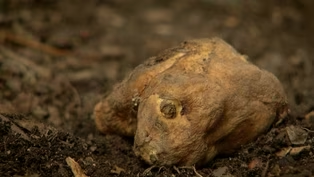
Clip: S26 Ep4 | 3m 16s | Set your garden up for success when trying to grow new plants (3m 16s)
Providing Support for PBS.org
Learn Moreabout PBS online sponsorship

- Home and How To

Hit the road in a classic car for a tour through Great Britain with two antiques experts.
 New Episode





 New Episode




Support for PBS provided by:
Virginia Home Grown is a local public television program presented by VPM