Virginia Home Grown
Crops of India
Clip: Season 26 Episode 4 | 7m 55sVideo has Closed Captions
Learn how crops from India grow in Central Virginia
Peggy Singlemann tours Happy Vibes Farm in Fauquier with Swathi Gaddam to discuss herbs and produce from India. Featured on VHG episode 2604, June 2026.
Problems playing video? | Closed Captioning Feedback
Problems playing video? | Closed Captioning Feedback
Virginia Home Grown is a local public television program presented by VPM
Virginia Home Grown
Crops of India
Clip: Season 26 Episode 4 | 7m 55sVideo has Closed Captions
Peggy Singlemann tours Happy Vibes Farm in Fauquier with Swathi Gaddam to discuss herbs and produce from India. Featured on VHG episode 2604, June 2026.
Problems playing video? | Closed Captioning Feedback
Where to Watch Virginia Home Grown
Virginia Home Grown is available to stream on pbs.org and the PBS app.
Providing Support for PBS.org
Learn Moreabout PBS online sponsorshipSwathi, usually when I walk into a greenhouse I can identify everything in there for the most part.
But here, there's many plants I've never seen before.
So tell me about them.
>>So Peggy, we crave for Indian vegetables and we started growing Indian vegetables here.
So right here, like for example, we have Malabar spinach and there's a green stem Malabar spinach, which we love because the stems are, you can cook them.
>>Yes.
>>Versus the red one and they love to trellis as well.
So we recommend people to put in their flower pots, like overflow or trellis them.
>>Nice.
>>There's purslane that is native.
So we let it grow and again, we take it to the market in our CSAs and it's all about goodness.
And we have, we also have lambsquarters that we crave.
>>Interesting native plants here that we don't think about valuing as a food source here.
>>Yes.
>>And then the tomatoes here, you have a unique companion planting here.
>>The interesting thing about this beds are I learned I could companion plant ginger and turmeric.
So this whole entire row, I have companion plants of ginger going along.
And let's see, I think it's early June, so they're just popping out- >>Right.
>>With the heat of the soil and the daytime temperatures and everything, they all thrive together.
>>Excellent.
I know with tomatoes we don't wanna water 'em too much, but the other crops, again, you're bringing in a subtropical tropical crop which says humidity, which says moisture.
How do you offset?
>>So very good question, yeah.
They also do not like too much water.
They like to be dried in between, yes.
>>So do you hand water, I see a lot of drip through here.
Is that running on a clock or is it more- >>It's more automated.
Yeah, it's more automated.
We run drips so that, you know, don't wanna rely on myself watering every day.
But yeah, we run the drips and then it's on a timer and it runs in the evenings.
And apart from tomatoes we also have bitter melon, all kinds of gourds like Ridge Gourd, which is close to Luffa family.
We have bottle gourds, which is close to like birdhouse gourds.
>>Right.
>>But it's a cultivar that's thin skinned and like more eatable.
And we have something called snake gourd or snake bean.
>>Interesting.
>>So those vegetables and we also have over there is Indian chilies.
>>How are Indian chilies different from the chilies I think of?
>>Again, it's, I think it's more of the nostalgia, like what the community craves, the taste and the texture and the shape of it.
But it's very spicy, like Thai chilies.
>>Oh good, yes.
>>And we do have one chili, very specific chili.
It's called chili bajji.
It's more like jalapenos for us.
We can stuff them and we can do like saute or stir fry with that.
>>You mentioned having crops all winter long, so what else are you growing?
>>So we also grow microgreens throughout the winter and then we also have our chickens, the microgreens, the pods and everything, they go straight to the chickens and we have eggs and microgreens that goes to the markets and chefs in the winter.
>>Excellent and then you have the eggshells from the chickens that you can work back into the soil?
>>Yes, they go back to the soil.
>>It's a wonderful cycle and you've got sorrel over there.
>>So we specialize a lot in the tasty greens.
And so the greens sorrel is something I absolutely love.
We can grow all year round and we use it a lot in our dishes.
We also have amaranth back there that loves heat and they just take on.
>>And I think when you say loves heat, there's such a climate difference between these plants in their native habitat than here, that it's a subtropical and tropical climate.
Where here in Virginia we have our four seasons.
How do you deal with this difference?
>>So I, similar to tomatoes, Peggy, like when the time is right, they go out, but they need to be protected before May or something.
They're very sensitive to the temperature.
For example, moringa only now it takes off.
Till now it's like, it's kind of sensitive.
>>Sitting there waiting for that heat to come, right.
How do you deal with the soil?
Because it's both granite bedrock from both countries, but it's completely different.
So how do you manage that?
>>So since it's higher water table here, Peggy, like we had to work with what we have.
It's heavy clay.
Yes, it's acidic.
So what we have done here, we raised it six inches up.
I add mushroom compost every year because we are growing so intensively and then that's how I just make sure the soil is healthy and- >>Yes.
>>Alive.
>>You're going into a really high organic soil, which is very similar to what these crops need and I love how you're doing it with mushroom compost.
What are some of the other changes or adaptations you've had to make?
>>So a lot of these plants have longer season in India or it's perennial, but here we have to treat as annually or a house plant.
That's one thing.
And then like also we start very early so it has a longer season to grow indoors.
>>You had mentioned earlier that one of the plants you grow is actually a tree, but here it can only reach eight feet.
Tell me about that.
>>So that's something you can find in the supplemental store as a powder or a capsule.
It's called moringa.
It's very popular.
So here for the cultivating, I grow it in the ground as a annual from May through October.
But we also grow it as indoor plants.
Like we bring them out during the season and put it back inside.
>>Okay, so you're able to do what a lot of us do with our house plants.
>>Exactly.
>>In and out and in and out.
That's- >>But you can eat them, yeah.
>>Yes, yes.
You've done so much and it's so inspiring but still, what were the challenges that you faced getting here?
>>We had a lot of failures, Peggy, like, because there's so much less information on these or like misinformation.
So we had to trial and error a lot of things on our own.
Like for example, growing roselle with Indian chilies and okra in the same bed and it was disaster for all of them.
So we had to learn about the spacing and the timing.
Like one year we planted purslane in late spring.
>>Oh.
>>And that was not good at, you know, went straight to flower and died so- >>Yes.
>>There's a lot of failures.
>>You have done so much in five years.
I'm so impressed.
So what are your plans for the future?
>>So this whole farm is about like getting vegetables and the whole food cycle close to your home.
So we more focus on the community around.
I want the community to taste what's farm fresh.
So that's why we partner with other farms to get their specialties.
So that's where I see myself going, to preserve the local food longer.
And then instead of going to the stores, like having more of fresh farm food onto the tables and we have a lot of gap to fill.
>>Yes.
Food grown straight from the soil and brought to our table just has such health benefits to us and it's not just prettier and it's not just supporting the farmers, which is all extremely important, but it's also got a higher nutritional value.
>>And yeah, we need more of that.
>>We do.
And we also need more of our regional foods to represent who we are culturally.
And I'm excited that you're here helping introduce everybody to foods that they normally wouldn't have a chance to experience.
>>Yeah, and it's wonderful going to the markets and like introducing this for the first time to the community and like we see all age groups just responding very positive and they come back year after year.
"Do you have roselle growing yet?"
Like, "When is it coming," or, so it's wonderful.
We also give them plants, like, we sell plants early season, so at least they're able to experiment in their own garden.
Yeah, it's been wonderful.
>>How fun.
Thank you so much for taking the time to share this with us.
>>My pleasure.
>>Enriching us all through a new plant palate and a new culinary palate as well.
Video has Closed Captions
Clip: S26 Ep4 | 7m 46s | Meet a farmer connecting her community with food (7m 46s)
Video has Closed Captions
Clip: S26 Ep4 | 5m 12s | Learn tips to grow ginger in a container (5m 12s)
Video has Closed Captions
Clip: S26 Ep4 | 3m 8s | Discover how saving seeds carries on cultural traditions (3m 8s)
Video has Closed Captions
Clip: S26 Ep4 | 6m 10s | Get tips for growing plants from seed (6m 10s)
Video has Closed Captions
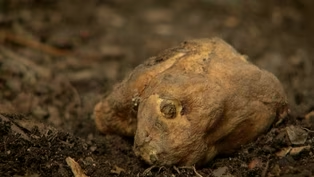
Clip: S26 Ep4 | 3m 16s | Set your garden up for success when trying to grow new plants (3m 16s)
Providing Support for PBS.org
Learn Moreabout PBS online sponsorship

- Home and How To

Hit the road in a classic car for a tour through Great Britain with two antiques experts.
 New Episode





 New Episode




Support for PBS provided by:
Virginia Home Grown is a local public television program presented by VPM