
February 20, 2026 - PBS News Hour full episode
2/20/2026 | 57m 46sVideo has Closed Captions
February 20, 2026 - PBS News Hour full episode
Friday on the News Hour, after the Supreme Court strikes down President Trump's global tariffs, he pledges to keep most of them in place through other means. In the midst of a military buildup, the U.S. considers a limited strike on Iran, but many fear this could lead to an all-out war. Plus, the EPA loosens restrictions on coal-burning power plants, allowing emissions of hazardous pollutants.
Problems playing video? | Closed Captioning Feedback
Problems playing video? | Closed Captioning Feedback
Major corporate funding for the PBS News Hour is provided by BDO, BNSF, Consumer Cellular, American Cruise Lines, and Raymond James. Funding for the PBS NewsHour Weekend is provided by...
Support provided by:

February 20, 2026 - PBS News Hour full episode
2/20/2026 | 57m 46sVideo has Closed Captions
Friday on the News Hour, after the Supreme Court strikes down President Trump's global tariffs, he pledges to keep most of them in place through other means. In the midst of a military buildup, the U.S. considers a limited strike on Iran, but many fear this could lead to an all-out war. Plus, the EPA loosens restrictions on coal-burning power plants, allowing emissions of hazardous pollutants.
Problems playing video? | Closed Captioning Feedback
How to Watch PBS News Hour
PBS News Hour is available to stream on pbs.org and the free PBS App, available on iPhone, Apple TV, Android TV, Android smartphones, Amazon Fire TV, Amazon Fire Tablet, Roku, Samsung Smart TV, and Vizio.
Providing Support for PBS.org
Learn Moreabout PBS online sponsorshipGEOFF BENNETT: Good evening.
I'm Geoff Bennett.
AMNA NAWAZ: And I'm Amna Nawaz.
On the "News Hour" tonight: After the# Supreme Court stri.. Trump's global tariffs, he pledges to keep# most of them in place through other means.
GEOFF BENNETT: In the midst of a military buildup,## the U.S.
considers a limited strike on Iran, but# many fear that too could lead to an all-out war.
AMNA NAWAZ: And the EPA loosens# restrictions on coal-burning power plants,## allowing emissions of hazardous# pollutants, including mercury.
JOHN WALKE, Natural Resources Defense Council:# They claim affordability, but in the fine## print of their own document, they admit that this# repeal will have no impact on electricity prices.
(BREAK) AMNA NAWAZ: Welcome to the "News Hour."
The Supreme Court struck down most# of President Trump's global tariffs## today in a 6-3 decision that is a# major blow to his economic agenda.
GEOFF BENNETT: The court ruled that# President Trump did not have the## authority under a 1977 economic emergency# law to issue such sweeping tariffs.
The president responded forcefully,# using sharp language to criticize the## justices who ruled against him, calling# them unpatriotic and disloyal to the## Constitution.
At a press conference, he# said he would move forward regardless,## vowing to impose a global 10 percent# across-the-board tariff under a different law.
DONALD TRUMP, President of the United# States: The Supreme Court's ruling on## tariffs is deeply disappointing.
And I'm# ashamed of certain members of the court,## absolutely ashamed for not having the# courage to do what's right for our country.
The Democrats on the court are thrilled, but# they will automatically vote no.
They're against## anything that makes America strong, healthy,# and great again.
They also are a, frankly,## disgrace to our nation.
Although I firmly disagree# with the court's holding today, the decision might## not substantially constrain a president's# ability to order tariffs going forward.
That's because numerous other federal statutes,## which is so true, authorize the president# to impose tariffs and might justify most,## if not all, of the tariffs issued in# this case, even more tariffs actually.
GEOFF BENNETT: And we start our# coverage tonight with the "News## Hour"'s Supreme Court analyst and# SCOTUSblog co-founder, Amy Howe.
Amy, it's always good to see you.
I want to read part of the chief justice's opinion# in this case w.. decision to impose the tariffs.
He says in part --# quote -- "The president asserts the extraordinary## power to unilaterally impose tariffs.
In light of# the breadth, history, and constitutional context## of that asserted authority, he must identify# clear congressional authorization to exercise it."
So what are your key takeaways from today's ruling# and this rebuke of the president's approach?
AMY HOWE: So this ruling didn't# come as much of a surprise.
After the oral argument, it seemed like# the Supreme Court was likely to strike## down the tariffs.
The real question was# how many justices would join to strike## the tariffs down and would they be able# to coalesce around a particular rationale?
I think probably from the justices'# perspective it's not a personal rebuke,## as much as it's a legal rebuke.
Under the# court's precedent for the president to## exercise this kind of sweeping power, they're# saying Congress needs to be really clear## before it hands over that power.
And they're# saying, we just don't see it here this time.
GEOFF BENNETT: Well, the president, as we# saw in that press briefing, he attacked the## justices personally and he also criticized# the way they wrote the decision, saying they## invalidated the tariffs, but didn't clarify what# should happen to the revenue already collected.
DONALD TRUMP: I said, well, what happens to all# the money that we took in?
It wasn't discussed.## Wouldn't you think they would have put one# sentence in there saying that keep the money## or don't keep the money, right?
I guess it# has to get litigated for the next two years.
So they write this terrible,# defective decision, totally defective.
GEOFF BENNETT: So, what do you make of that?
And earlier this evening, you# have the governor of Illinoi.. J.B.
Pritzker, demanding a $1,700 refund# per family for the people of his state.
AMY HOWE: The only real reference to it is in## Justice Brett Kavanaugh's opinion# for the three dissenting justices.
The lack of reference to the refunds# is complicated by the fact that the## litigants who were actually before# the Supreme Court in these cases had## been promised immediate refunds by the# federal government if they prevailed,## and it wasn't actually part of the# question before the Supreme Court.
The only question before the Supreme# Court was, does this federal law,## the International Emergency Economic Powers Act,## authorize the tariffs that the president# imposed?
Could the Supreme Court have said## something about the refunds?
Maybe, but it wasn't# entirely surprising that they didn't do it.
GEOFF BENNETT: The way the president attacked# the justices, what does that reveal about## the relationship between the president# and the Supreme Court in this moment?
AMY HOWE: Well, in this moment, clearly, it's not# good.
The Trump administration, particularly on## the court's emergency docket, had been on a# long winning streak in the Supreme Court for## basically all of 2025.
There was something like# 24 straight victories on the emergency docket.
The Trump administration is likely to# prevail in some other important cases## involving executive power, including# the question of whether or not the## president has the power to fire the heads# of independent agencies like the Federal## Trade Commission and the Consumer Product# Safety Commission for any reason at all.
In the past, he has referred to the justices that# he has appointed as my justices.
And so he feels,## I think, betrayed by Justice Neil# Gorsuch and Justice Amy Coney Barrett,## who were in the majority# today and who he appointed.
So I think he feels like the Supreme Court# possibly is there to rubber-stamp his policies,## and, with Justice Barrett and Justice# Gorsuch, perhaps a bit transactional,## that they are there because he appointed# him and they should support him.
GEOFF BENNETT: Amy Howe, thanks,# as always, for your analysis.
AMY HOWE: Thank you.
AMNA NAWAZ: For more on what today's ruling means.. professor of law and finance at Yale University# and president of the Budget Lab at Yale.
Good to see you, Natasha.
So we got this Supreme Court ruling# at 10:00 Easte.. the president had announced a new# slate of tariffs.
Help us understand,## which of the tariffs are now# gone and which are in place?
NATASHA SARIN, President, Budget Lab# at Yale University: So I will say it## is a bit of a whirlwind.
And the nature# of what happened this morning was you## basically had the president having# effectuated across-the-board tariffs## on allies and adversaries like at levels# that we haven't seen in the last century.
The Supreme Court said that about# two-thirds of those tariffs,## the tariffs that had been issued under# this particular authority called IEEPA,## were invalidated as a result of their decision.# And then, as was widely expected, as a result## of a decision like this, the president said he# plans to use other authorities like Section 232## or Section 122 of the Trade Act, in order to# be able to essentially keep in place tariffs## that were at levels that were dismissed# by the Supreme Court earlier this morning.
That's actually a harder thing to do# in practice than you might think having## listened to the president this afternoon# because there are more rules and process## requirements associated with the other# authorities that he's trying to deploy,## which is why his preferred authority was one# that the Supreme Court said simply couldn't## whether the burden of tariffs as broad-based as# those that this administration has pushed for.
AMNA NAWAZ: And you just heard# a little bit about this in the## previous conversation.
What about# those billions in tariff revenue?## Could retailers and manufacturers see some# kind of a refund?
Could consumers as well?
NATASHA SARIN: What's so interesting is that in# oral argument, Justice Amy Coney Barrett said,## won't it be a mess with respect to# trying to think about what to do## with the fact that about $140 billion# of revenue have already come into the## fisc as a result of these tariffs that# were at play in the Supreme Court case?
Just as Amy Coney Barrett ultimately ruled to# invalidate those tariffs, along with the majority,## but Justice Kavanaugh said explicitly,# this is in fact going to be a mess,## recalling her in oral argument.# And the decision says literally## nothing with respect to what is going# to happen with respect to those refunds.
One reason why that really matters to consumers# is a large chunk of those $140 billion that have## already been paid into the fisc as a result# of these tariff levels have actually been## passed through in the form of higher prices.
We# estimate my colleagues and I at Budget Lab that## that cost the average American household# around $2,000 a year in higher prices.
But if there are any refunds, they're going# to go to the firms, the importers of goods.## And so how that ultimately plays out with# respect to the consumers seeing these dollars,## that's an open question.
How these# refunds would even work in practice,## big open question that this# decision says nothing about.
AMNA NAWAZ: Natasha, what about this# new 10 percent global tariff that the## president also announced?
Given# how the Supreme Court just ruled,## does he have the authority to do# that or does he need Congress?
NATASHA SARIN: Part of what I'm worried# about with respect to these alternate## trade authorities is you're almost in# this tariff legal uncertainty doom loop,## where he's effectuating these 10 percent# across-the-board tariffs that were in## place this morning before this decision# landed through this alternative authority.
I'll note that this alternative authority only# gives him the capacity to keep those tariffs in## place for 150 days.
What happens after those 150# days, who's to say?
But even for those 150 days,## does he have the power under this authority# to levy tariffs like this?
It's never been## tried before and it's ultimately# something that is likely to reach## the Supreme Court in some capacity over# the course of the months and years ahead.
And so I think tariff uncertainty# is here with us to stay for quite## some time.
And I suspect this is# not the last time that the highest## court in the land is going to be# weighing in on these questions.
AMNA NAWAZ: You look at the economic# impact of all of these things.
In a minute or so we have left, with the# existing tariffs that are still in place,## with this new 10 percent global tariff, what's# the economic impact you're looking at there?
NATASHA SARIN: So what we know is that# tariffs are at their highest level that## we've seen over the course of the last century.# As a result of today's Supreme Court decision,## tariff rates fell from something like an effective# tariff rate of 16 percent to around 9 percent.
But they rose way back up as a result of# these 10 percent across-the-board tariffs## that the president announced this afternoon# that basically held in place a large chunk## of his existing tariff agenda.
And all that# is to say these are the most inflationary## policies in our lifetimes.
Tariffs# are a tax on the American consumer,## to the tune of several thousand# dollars of increased prices every year.
And at a moment when the American people are# still grappling with post-pandemic inflation,## higher prices for literally everything that they# consume than they remember just a few years ago,## it is striking that we are pursuing# these types of inflationary policies,## and really to no economic end that has been# clearly articulated from this administration.
AMNA NAWAZ: Natasha Sarin, president of the Yale# Budget Lab, thank you so much for your time.
NATASHA SARIN: Thanks so much for having me.
GEOFF BENNETT: And turning now to one# of the plaintiffs from today's case,## that's Rick Woldenberg, owner of the Chicago-based# small toy manufacturer Learning Resources.
Welcome back to the "News# Hour."
Thank you for having me.
Rick, last November you told us your tariff costs# had risen sixfold, more than sixfold, in fact,## in a single year.
So what was your reaction# when you heard the Supreme Court decision today?
RICK WOLDENBERG, CEO, Learning Resources: Well,## obviously, we were very gratified to have# the support of the Supreme Court.
We felt## vindicated in our assertion that the# tax that we were paying was unlawful.
I can also tell you that it was a# demonstration of the rule of law## in action.
And so I was comforted by# the fact that I felt that the court## was impartial and applied the law as# written.
That's important to everybody.
GEOFF BENNETT: The tax, as you# describe it, the added cost,## how much of that did your company absorb and# how much did you have to pass on to customers?
RICK WOLDENBERG: Well, it's# an interesting question.
I took a look at it.
And our tax rate, federal# plus state, plus IEEPA tariffs, .. of 100 percent last year.
And so you can't stay# in business if you make a dollar and you pay more## than a dollar in taxes.
You will eventually# have no dollars.
So we had to pass it on.
And that tells you exactly why other# companies had to pass it on too.
You## can't have a marginal tax rate that is# greater than your earnings.
So we passed## on some of it.
We passed on as little as we# felt we could manage.
And in heading into '26,## we already decided we were going to win# the case.
And so we decided to treat our## financials as if we weren't going to pay# tariffs, and we didn't raise our prices.
So we're actively trying to average our price# down to where we think it would have been.
GEOFF BENNETT: The president today, in# railing against the Supreme Court, announced a## 10 percent global tariff.
So, in practical terms,# what actually changes for your business tomorrow?
RICK WOLDENBERG: Well, at least our tax rate went# down, because most companies -- most countries## were being taxed at 18, 19, or 20 percent.# And when I say the countries were being taxed,## I mean we were being taxed to the# tune of 18 or 19 or 20 percent.
So now, at 10 percent, that's about a reduction# in half.
It didn't go to zero.
And 122,## Section 122 can only impose a tax for five months.# So I guess we will see what happens after that.
GEOFF BENNETT: As we were discussing earlier,# the court in striking down these tariffs didn't## spell out what happens to the revenue already# collected.
What's your hope and expectation?
RICK WOLDENBERG: Well, they did say# that the law does not provide for## tariffs.
So the tariffs were# unlawful when imposed.
That## means that the government took money# from us they had no right to take.
And just like paying too much in taxes, they have# to give it back with interest.
That's what the law## provides.
So it was never anyone's expectation,# I don't think, that the Supreme Court would## fashion a remedy.
They will send it down.# But having -- for the remedy to be created.
But they also said quite clearly these tariffs## were collected unlawfully.
That# means they have to be returned.
GEOFF BENNETT: And lastly, Rick, I'm not sure# if you were watching the press conference with## the president today, but he resorted to# name-calling when talking about you and## the other plaintiffs.
I won't repeat what he# said, harsh language, choice words, to be sure.
I wonder if you have a response to that.
RICK WOLDENBERG: Somebody told me he said# I was good-looking.
He didn't say that?
(LAUGHTER) RICK WOLDENBERG: I don't think that# these issues are solved by pointing## fingers.
And I have not allowed our# case to become political.
So I don't## have to take the position that we are# against an individual like Mr.
Trump.
We were against the misapplication of law, and# that's what we said.
And so I'm not sure that## any reply is necessary.
We are companies# located in Chicago.
We make educational## products that go into schools and homes.
I# don't know why anyone would be angry at us.
GEOFF BENNETT: Rick Woldenberg, owner of the# small toy manufacturer Learning Resources,## thanks again for joining us.
RICK WOLDENBERG: Thank you.
AMNA NAWAZ:## Today, President Trump suggested he was# considering a limited strike on Iran,## while Iran's foreign minister said he# was drafting a new diplomatic proposal## as part of ongoing negotiations.# The public statements come as the## United States continues to deploy a large# number of military assets in the region.
Nick Schifrin has been following# this all and joins us now.
So, Nick, what did we hear# from the president today?
NICK SCHIFRIN: Well, as you said, Amna, the# president suggested that he was considering## a limited strike on Iran in order to try and# convince Iran to accept a diplomatic deal.
That seems to confirm a report# in The Wall Street Journal,## but he said it with a smile in a chaotic# room.
So let's take a listen to the question,## to the answer, and also what he said about# the nature of the deal this afternoon.
QUESTION: Mr.
President,## are you considering a limited military# strike to pressure Iran into a deal?
WOMAN: Thank you, press.
Thank you, press.
QUESTION: Are you considering# a limited strike, sir?
DONALD TRUMP, President of the United States:# I guess I can say I am considering that.
They better negotiate a fair deal.
NICK SCHIFRIN: President Trump also# said today that Iran's crackdown## of an unprecedented number of protests last# month killed 32,000 people.
That's a number## I have heard some activists use, but the# U.S.
government has never used before today.
But, remember, Amna, the crackdown was what# started this round of threats.
President## Trump warned that, if Iran killed protesters,# he would respond.
Iran crossed that red line## by the thousands.
But other than Starlinks,# the president never enforced his red line.
AMNA NAWAZ: Nick, is it fair to say, with the# president's statement the number of military## assets in the region, the threat, military# threat, has gone up in the last few days?
NICK SCHIFRIN: Yes, I mean, this is one of the# largest deployments to the Middle East in decades.
Let's take a look at the map, and I# want to point out a few things.
You## see the green triangles there.
Those# are the dozens of bases that the U.S.## has access to that Iran is threatening# to target, the red triangles, right,## two carrier strike groups, one south of Iran, the# other entering the Mediterranean sailing east.
And all of those yellow dots, more# than a dozen ships, those can fire## missiles toward Iran, but also contribute# to air defense.
In addition to all of that,## there are dozens of additional fighter jets that# have been deployed to the region.
And officials## tell me all of this gives the president# a range of options for military strikes.
AMNA NAWAZ: What do we know# about what Iran's saying how## they would respond to even a limited strike?
NICK SCHIFRIN: So a regional official told# me and other reporters last night that Iran## would respond to even a limited strike# by walking away from the negotiations.
So the idea of a limited strike producing a better# result in negotiations, he said, was not true.
And## that was echoed by every expert I talked to,# and these experts have a range of opinions.
It was also echoed by Iran's foreign minister,## Abbas Araghchi, speaking# on MS NOW's "Morning Joe."
ABBAS ARAGHCHI, Iranian Foreign Minister# (through translator): Military option would## only complicate this, would only bring about# disastrous consequences, not only for us,## perhaps for the whole region.
If you talk with# the Iranian people with the language of respect,## we respond with the same language.
But if# they talk to us with the language of force,## we will reciprocate with the same language.
NICK SCHIFRIN: Araghchi also said that Iran would# finalize a new offer to the U.S.
for diplomatic## talks in the next two to three days.
But he# said that the U.S.
had not asked Iran to freeze## enrichment or to go down to zero enrichment,# which is the administration's public position.
ABBAS ARAGHCHI: What we are now talking about# is how to make sure that Iran's nuclear program,## including enrichment, is peaceful# and would remain peaceful forever.
NICK SCHIFRIN: A White House official tells# me tonight -- quote -- "Iran cannot have## nuclear weapons or the capacity to build# them and they cannot enrich uranium."
That seems to me, Amna, a declarative statement# against Araghchi's claim.
And, again, all experts## saying right now that it's pointing to some# kind of U.S.
military strike in the near future.
AMNA NAWAZ: All right, Nick# Schifrin, thank you very much.
NICK SCHIFRIN: Thank you.
AMNA NAWAZ:## We start the day's other headlines with the# latest fallout from the Jeffrey Epstein files.
Police searched the former home# of Andrew Mountbatten-Windsor,## located on the grounds of Windsor Castle west# of London.
The king's brother had lived there## for decades until his eviction earlier# this month.
The search comes a day after## he was arrested on suspicion of misconduct in# public office related to his friendship with## the late convicted sex offender.
The former# prince was released after nearly 11th hours.
Separately, the lobbying firm co-founded by# Peter Mandelson has halted operations.
The former## British ambassador to the U.S.
has come under# increasing pressure due to his ties to Epstein.## And in this country, Bard College in New# York has opened an independent review into## the relationship between Epstein and the# school's longtime president, Leon Botstein.
The Trump administration is requiring all# truckers and bus drivers to take commercial## driving tests in English.
The move was announced# today by Transportation Secretary Sean Duffy,## who said it would get unqualified# drivers off the road and improve safety.
SEAN DUFFY, U.S.
Transportation Secretary:# Just because you're a foreigner,## that doesn't mean that you can't drive a big# rig, you can't drive a truck.
Well, what's## happened, that we have had so many unskilled,# unqualified, untrained drivers on American roads.
AMNA NAWAZ: Many states allow drivers to# take license tests in other languages,## but still require that they# show proficiency in English.## Today's announcement is part of a broader# crackdown on the industry since a fatal## crash last August involving an immigrant driver# who officials say was in the country illegally.
In New York, the largest nursing strike in# decades is close to ending after thousands## of nurses reached a tentative agreement with# management today.
More than 4,000 nurses at New## York Presbyterian Hospital had been on the picket# line for more than a month.
The union says today's## deal includes staffing improvements, a 12 percent# pay raise, and safeguards against the use of A.I.
If approved, nurses could return to work as# early as next week.
They would rejoin the## nearly 11,000 other New York nurses who ratified# contracts with two other hospitals last week.
In Venezuela, opposition groups say a new# amnesty law that could lead to the release## of hundreds of political prisoners does not go# far enough.
Acting President Delcy Rodriguez## signed the measure yesterday.
It signals a# broad shift in policy towards such prisoners,## but has upset some families by excluding# certain groups like detained military members.
Opposition leader Juan Pablo Guanipa had been# under house arrest.
The bill granted his freedom,## but, speaking to reporters, he# warned of a long fight ahead.
JUAN PABLO GUANIPA, Venezuelan Opposition# Leader (through translator): The important## thing is not the law.
The im.. who are outside will be able to return and# that we will be able to have all political## prisoners released.
That is what has to happen.# And that is the pressure that we have to exert.
AMNA NAWAZ: A Venezuela-based# rights group estimates some## 600 people remain in jail for political reasons.
House Speaker Mike Johnson's office denied a# request for the late Reverend Jesse Jackson## to lie in honor in the U.S.
Capitol Rotunda.# Jackson's family and some House Democrats had## filed the request for the civil rights icon,# who died earlier this week at the age of 84.
In rejecting the request, the speaker's office# cited past precedent.
Most recently, a request to## honor slain conservative activist Charlie Kirk was# also denied.
But there have been some exceptions,## including civil rights icon Rosa Parks in# 2005 and the Reverend Billy Graham in 2018.
Even before today's tariff announcement, a pair# of economic reports raised new concerns about## the health of the U.S.
economy.
The Commerce# Department said today that the fourth-quarter## GDP rose just 1.4 percent when compared# to the year before.
That was due largely## to the effects of the government shutdown# and was less than economists had expected.
A separate report showed a vital gauge# on inflation rising 2.9 percent in## December, well above the Fed's# preferred target of 2 percent.
On Wall Street today, stocks posted decent# gains following the Supreme Court's tariff## decision.
The Dow Jones industrial average added# 230 points on the day.
The Nasdaq rose 200 points,## or nearly 1 percent.
The S&P 500# also ended in positive territory.
And tributes have been pouring# in for actor Eric Dane,## the "Grey's Anatomy" star# who passed away yesterday.
ACTRESS: McSteamy, woo-hoo.
ERIC DANE, Actor: Is that what# you call me now, McSteamy?
AMNA NAWAZ: Dane made his first# appearance as plastic surgeon Mark Sloan,## also known as McSteamy, exactly 20# years ago to the day of his passing.## He played that role from 2006 to 2012.# Dane also portrayed the troubled Cal## Jacobs on HBO's "Euphoria," among# other TV and film appearances.
Last April, he announced he'd been diagnosed# with ALS, a progressive disease also known as## Lou Gehrig's disease, and became an# advocate for the illness.
After his## diagnosis, Dane recorded this video message# speaking directly to his teenage daughters.
ERIC DANE: I hope I'm demonstrating that you can# face anything,you can face the end of your days,## you can face hell with dignity.
Fight,# girls, and hold your heads high.
AMNA NAWAZ: In a statement, his family# said -- quote -- "He will be deeply## missed and lovingly always.
"# Eric Dane was 53 years old.
There are just two days of competition left at# the Winter Olympics and the U.S.
is looking to## lock in a few more medals before the Games wrap# up.
There are spoilers ahead, so fair warning;## 31-year-old us skier Alex Ferreira# finally got a gold in the men's free## ski halfpipe.
He's won silver# and bronze in past Olympics.
The U.S.
men's hockey team dominated Slovakia# today, winning 6-2.
They will face archrival## Canada in the gold medal match on Sunday, the# last day of the Games.
U.S.
women's curling## came up short against Switzerland, so they# will vie for the bronze tomorrow.
Looking## at the overall medal count, the U.S.
remains in# second place with 29.
Norway maintains the lead## with 37 medals and with 17 golds broke its own# record for most golds at a single Winter Games.
Still to come on the "News Hour": Wyoming Governor# Mark Gordon discusses key issues facing states in## this politically fraught time; David Brooks and# Jonathan Capehart weigh in on the week's political## headlines; and Palestinians in Gaza observe# Ramadan despite enormous destruction and loss.
The Environmental Protection Agency is scaling# back limits on toxic emissions from coal-burning## power plants, clearing the way for them to# emit more hazardous pollutants like mercury.
Stephanie Sy has more on these changes.
STEPHANIE SY: That's right, Amna.
In a statement today, the EPA said the# deregulatory action will ensure affordable,## dependable energy for American families and# restore American energy dominance.
Public## health advocates are warning that rolling# back limits on mercury and other hazardous## air pollutants would harm human health and# ultimately drive up health care costs too.
To get more on that and the# environmental perspective,## I'm joined by John Walke from the Natural# Resources Defense Counsel, or NRDC.
John, thank you for taking the# time to join the "News Hour."
As you know, the administration can't really# roll back all the mercury restrictions,## which courts have upheld under the# Clean Air Act since 2012, right?
So,## what is the Trump administration doing exactly# and what do you think is the ultimate goal?
JOHN WALKE, Natural Resources Defense Council:# The Trump EPA today rolled back safer limits## on mercury pollution by 70 percent.
They# rolled back safer limits on toxic soot## pollution by two-thirds, and they rolled back# any need for continuous emissions monitors.
They claim affordability, but in the# fine print of their own document,## they admit that this repeal will# have no impact on electricity prices,## and indeed the safer limits and better monitoring# would have had no impact on electricity prices.
STEPHANIE SY: Now, we did ask a representative# with the Trump administration's EPA to join us.## They declined, at least for today,# but they pretty much share the power## industry's perspective on this, which is# that the additional regulations Biden's## EPA put forth were harmful to the# coal industry and energy security.
The head of America's Power# issued a statement today that## stated that -- quote -- "Repealing the 2024# rule helps prevent premature retirements of## coal plants and strengthens grid# reliability at a critical moment."
John, how much of a lifeline does this# rule change give to the coal industry,## which has been on the wane for many years?
And# what are the greater repercussions of that?
JOHN WALKE: No lifeline at all, actually.
EPA, again, in the fine print, found that# this would have no impact on coal plant## retirements.
And the Biden EPA, when it# strengthened the standards, also found it## would have no impact on retirements.
The truth# is that the coal industry has faced headwinds## from competition with cleaner renewable# energy from plants that burn methane gas.
And there has been a steady downward# spiral of electricity generated from## coal over the past decade.
And that will continue## notwithstanding this attack on health# safeguards and clean air protections.
STEPHANIE SY: We have seen the# Trump administration strip away## greenhouse gas emission limits as well.# But what makes this EPA rule different,## from what I understand, John, is,# this directly impacts human health?
Remind us what the science tells us about exposure# to mercury, its impacts on the human body,## particularly babies and developing fetuses,# and what you see as truly at stake here.
JOHN WALKE: What's at stake is more mercury# emissions that are a brain poison.
And they## poison and harm the developing brains# of the fetus, of young children,## babies, children all the way# up to 12 or later, actually.
So it is causing learning deficiencies.# It is causing I.Q.
lost.
And that's in## addition to all the other health hazards from# rolling back the toxic soot pollution limit,## which contributes to cancer and birth defects# and infertility, miscarriages and much more.
STEPHANIE SY: You mentioned that the amendments# put forth by the Biden administration included## a requirement for so-called continuous# emissions monitoring at power plants.## That goes away with this rule change under# Trump.
Talk about the significance of that.
JOHN WALKE: I was even floored by this# when I read EPA's documents today.
They admit in the fine print that# eliminating a continuous emissions## monitor at a coal plant -- and there are# about 200 in the United States -- will## save that coal plant $14,000.
Now,# coal plants and coal companies in## this country have revenues of tens# to hundreds of billions of dollars.
And they are saving coal plants $14,000# per year for each monitor.
The truth is## that Americans would have gotten# far more benefit and transparency## from requiring continuous monitors that# show hourly emissions of toxic pollution,## which in turn drives better reductions# in pollution and better compliance.
The Trump administration wanted to eliminate# all of those goods in order to save $14,000.
STEPHANIE SY: That is John Walke with the NRDC.
John, thank you for joining us.
JOHN WALKE: Thank you, Stephanie.
GEOFF BENNETT: President Donald Trump# welcomed both Democratic and Republican## governors to the White House this# morning for a bipartisan meeting.
As that gathering was under way, the U.S.# Supreme Court handed down its major ruling## on tariffs, a decision that could affect# a number of states, including Wyoming,## where trade and energy production play# an important role in the state's economy.
Wyoming's Republican Governor Mark Gordon attended## the morning's gathering of# governors, and joins us now.
Thanks for being here.
GOV.
MARK GORDON (R-WY): Wonderful# to be .. GEOFF BENNETT: I want to start with# trade, since the Supreme Court,## as you know, struck down the# administration's tariffs.
Well, how does that decision change the# outlook for Wyoming producers and exporters,## especially ranchers, energy companies,# for instance, that rely on global markets?
GOV.
MARK GORDON: Well, I# think that's a good question.
What I would say is that we had already started# some work with Japan and other countries in Asia## to talk about getting our natural gas off the# West Coast, be able to get our coal off the West## Coast.
It's not really clear to us exactly# how this trade decision will change that.
I think Japan, for example, was very# high -- Governor Lujan Grisham and I## were in Japan last year, and they were# very high on the notion of being able## to buy American energy.
We hope this continues,# and that trade deficit is able to be decreased.
GEOFF BENNETT: Well, what are you# hearing from industry in your state?
GOV.
MARK GORDON: We were all# beginning to adjust to it.
GEOFF BENNETT: Right.
GOV.
MARK GORDON: Our ability to -- first# of.. Our concerns were domestic consumers.# The market has been really quite good.
As far as energy is concerned, our interest# is being able to get that offshore.## We have tremendous amounts of energy, and# we're really looking at A.I.
as being a## boon to us.
So we're going to adapt# kind of however it comes best for us.
Right now, it's a little# hard to know if it's going## to change our manufacturing, any of that stuff.
GEOFF BENNETT: On energy, President Trump# pledged to expand domestic energy production.## What specifically has the administration delivered# for Wyoming, and where do you still want action?
GOV.
MARK GORDON: Well, I think# we're very excited about this## administration, because we are not# constraining what we can produce.
So we have -- Wyoming's a powerhouse.# We have tremendous amounts of fossil## fuel.
We have led the nation on carbon# capture and other things that can make## sure that we can both address climate# issues and produce more energy, energy## that's available and can be produced easily.# We have tremendous resources of wind and solar.
And then we have also built up our nuclear# industry.
TerraPower and BWXT are both## doing work in Wyoming now.
So we're very# excited about this administration kind## of opening that up.
There's those# legacy pieces that we're working## through.
The last administration had put some# constraints on some of our ability to develop,## and we're hoping that those can# be done away with fairly quickly.
GEOFF BENNETT: Let's talk about that,# because there's news on environmental## regulation today too.
The administration# announced it's rolling back some clean## air regulations for power plants, including# limits on mercury and hazardous air toxins.
Wyoming has taken steps to regulate methane# and wildlife conservation.
So how do you## balance environmental stewardship# with economic competitiveness?
GOV.
MARK GORDON: Well, I think one of the# most important things for Wyoming has been,## if we do it locally, we have stakeholder# engagement.
The people that work in the## energy business are also hunters.
They love the# outdoors.
They love taking their family fishing.
So they care a lot about what we're able to# do, which is why we have tried to balance## how we develop our energy in a way that# preserves our migratory game pathways,## makes sure that our sage grass# populations are protected.
And the state has done that.
And it# has done it very successfully.
I think,## when we look at what we can do, as# opposed to telling us what we can't do,## and we say we want to balance environmental# protection with development, we don't want## to hold back the energy this nation needs,# I think you look at the people who can solve## those problems on the ground, and this# administration has allowed us to do that.
GEOFF BENNETT: Why do you think this has# been controversial at the federal level,## where it seems like you found a# strategy for success in the state level?
GOV.
MARK GORDON: Yes, I# -- that's a good question.
You look at the results that we have and,# generally speaking, people are saying, gosh,## that's working with sage grass, that's working# with migratory game animals.
There may be just## this notion that Washington can cure everything.# If we do it here, we can make it happen elsewhere.
But the real resistance I have to that is that# we have private property interspaced with state## and federal lands.
And when you try to impose the# federal will on that, you don't have stakeholder## engagement, you don't have stakeholder belief# in the outcome, and that's the difference.
GEOFF BENNETT: Wyoming is one of# the most reliably Republican states## in the country.
Does that free# you up to govern pragmatically?
GOV.
MARK GORDON: Yes, I think it does.
I think what Wyoming is really focused# on is sensible solutions to making sure## that we can still power our nation.# We were the nation's first national## park.
that's deep in our DNA.
And so I think# what it has given us is the ability to kind## of work carefully with property owners# and others to find the best solutions.
We have worked also with Democrat administrations# as well.
And I think one of the friendships that I## treasure most is my relationship with Governor# Lujan Grisham.
We both are energy states.## We are not going to agree on everything, but we# realize that together we can probably do a better## job of representing what's important# to America, if we do work together.
GEOFF BENNETT: Wyoming Governor# Mark Gordon, thanks for coming in.
GOV.
MARK GORDON: Thanks so much.
GEOFF BENNETT:## The Supreme Court's tariff# ruling and President Trump's## response topped off a week that saw key# developments on the international stage.
For more, we turn now to the analysis# of Brooks and Capehart.
That's David## Brooks of "The Atlantic" and# Jonathan Capehart of MS NOW.
Good evening to you both.
So, David, we will start with you.
Jonathan, feel free to#take a sip of water if you need it.
The key takeaways of this#Supreme Court tariff ruling, as you see them.
DAVID BROOKS: Well, it'll# make tariff-issuing harder,## certainly will not make them go away.# Trump has made that perfectly clear.
But just on the substance of it, it's become# clear that this tariff policy is a gigantic## economic failure.
It was designed to reduce --# to increase manufacturing jobs in the United## States.
Manufacturing jobs have continued# their decline, maybe at an accelerated rate.
At the same time, according to a Fed study this# week, 90 percent of the costs are passed on to## American consumers.
So it's a tax on Americans.# And then it's -- so it's led to inflation.
But the big picture here is that the Supreme# Court has had a pretty consistent line on## federal power.
They have given Trump# a lot of broad latitude to run the## executive branch.
But they have not given him# broad latitude to run the legislative branch.
They have said this is a clear legislative thing.## It's in the Constitution, taxing and# spending, tariffs.
It's right there.## And they're trying to draw a line around the# presidency.
Back in like 1973-'74, a historian## named Arthur Schlesinger wrote a book called# "The Imperial Presidency" about Richard Nixon.
That wasn't even close to where we# are today.
This is the most imperial## presidency in American history.
And the# worst part is, it's accompanied not only## by a president who wants to grab every power, but# a Congress whose power is imploding voluntarily.
And so part of the problem here is the# unwillingness of Congress to do their job.## And that leaves a vacuum that Trump can fill.
GEOFF BENNETT: Jonathan, what about that?
President Trump has for years now pushed the.. term and in the first year of his second term.# How significant is it, after years of the Supreme## Court really reinforcing his expansive view of# executive power, two of the justices he appointed## effectively broke with him today?
JONATHAN CAPEHART: It's a good sign## that the Supreme Court isn't as in lockstep# with the president as a lot of people feared.
The other thing -- excuse me -- never swallow just## before -- your own saliva just# before you go.
My apologies.
(LAUGHTER) JONATHAN CAPEHAR.. the justices basically said in the# ruling, you know, Mr.
President,## there is a way to do what you want to do.
And# it's by doing it with the legislative branch.
So as much as it was a smackdown of the president# and his overreach, it was a reminder to Congress## that basically, yo, you guys have a job to do.# The Constitution lays it out.
Get to work.
Whether## this Congress, with this Republican majority# and particularly with this Republican speaker,## whether they will take the Supreme Court up on# its opportunity to do its job remains to be seen.
GEOFF BENNETT: Well, after the ruling,## the president took to the White House# Briefing Room.
H.. and he escalated his attacks against# the court and the justices themselves.
DONALD TRUMP, President of the United# States: The Supreme Court's ruling on## tariffs is deeply disappointing.
And I'm# ashamed of certain members of the court,## absolutely ashamed for not having the# courage to do what's right for our country.
They're very unpatriotic and# disloyal to our Constitution.
GEOFF BENNETT: Disloyal to our Constitution.# Is there a point at which the president's## rhetoric -- maybe we're already there --# becomes corrosive to the institution itself?
DAVID BROOKS: Well, Donald Trump has# never had an honest disagreement with## somebody and where you say, oh, I disagree# with you and without him going ad hominem.
And that is just his nature.
It is the# nature of somebody with a narcissistic## personality disorder to think, I am the# center, and everything that's an assault## on me cannot be anything but a shameful# attack on all that is right and good.
And so it's very hard.
We travel around the# country.
We meet people trying to heal America,## trying to build conversations.
And it's just# frustrating that all these people are doing## this work around the country at the same time,# day by day, there's a shredding from the top.
And so there's these forces of humanization# that are trying to have a decent country,## and then the shredding from the top is just# a constant battle of forcing dehumanization.
GEOFF BENNETT: As we have been speaking,# the president signed the executive order## establishing this 10 percent global tariff.
It# expires in 150 days unless Congress extends it.
Does that though, Jonathan, set up a trap for# Republicans in Congress, given how unpopular## tariffs are?
They're certainly going to be# pressured by President Trump to fall in line.
JONATHAN CAPEHART: And they're going to# be pressured by Democrats who want to## do something about the president's tariff regime.
So, yes, they're in a trap, they're# in a quandary, they're in a bind,## just as they are in a trap, in a# quandary, in a bind.
Let's not forget,## there's still a partial government shutdown.# And we haven't heard -- at least I haven't## heard anything about any kind of negotiations# to reopen the Department of Homeland Security.
And on the president's remarks, going# after the Supreme Court, the same Supreme## Court that gave him immunity for official# acts, and he was all happy about them then.## But of all the shameful remarks he gave in that# press conference, when he said not only that he## thought that those justices should be ashamed,# but that their families would be ashamed of them,## and that, to me, just -- just when I thought# he couldn't get any lower, he gets lower.
And I don't know why I keep thinking he# won't go any lower, but he does.
But that,## I thought, was really shameful# on the part of the president.
GEOFF BENNETT: Let's shift our focus to the# president convening this past week the first## meeting of what he's calling his Board of# Peace, dozens of international leaders,## you see them there, discussing ongoing conflicts,# including Gaza, the rising tensions with Iran.
David, we have spoken on this program about U.S.# retrenchment.
Is this a reassertion of American## leadership, or do you see this as executive# overreach in the foreign policy sphere?
DAVID BROOKS: Yes, it's not ideal what he's doing.
And I'd say it's not ideal for a couple of# reasons.
One, there's really no recipe for## how you're going to get Hamas to disarm.# And unless you do that, there's going to## be no investment.
And so unless you have a# strategy for that, you really don't have a plan.
Second, there's not enough Palestinian input# there.
This is their place and eventually,## we hope, their country.
And they should be## beginning the redevelopment of their# own country with outside assistance.
Nonetheless, I think this is worth a shot.# I think America has led international## development programs for all through the 20th# century.
And some of them worked and some of## them didn't.
But I don't see anything# else on offer to get Gaza some aid.
The U.N.
has totally morally bankrupted# itself in that region.
They're not going## to do anything.
They don't have the trust# of the Israelis, let alone other people.## And they shouldn't have our trust, at least# on this issue.
I'm not a big U.N.
ambassador,## but, on the Middle East, they have# sacrificed their moral authority.
And so I don't see anybody else doing it.
And# so if Trump wants to lead an international## coalition to do international development in# Gaza, I don't see anything better on offer.
JONATHAN CAPEHART: Here's my question, though.
In event of an opportunity to# ask the president questions,## this is what I would ask him, Mr.# President, two-part question.
One,## where is the $10 billion you committed yesterday?# Where's that money coming from?
And, two,## into which bank is it -- offshore bank is it going# to, a bank that you, as the leader of this board,## gets to decide where this money goes# and you decide how that money is spent?
Why shouldn't the American people think# that the money that you are using,## taxpayers' money, isn't going to end up# in your own pocket or the pocket of your## family and not make it to Gaza?
That is# the question that I would love to ask.
GEOFF BENNETT: In the time that remains, I want to# get your reflections on Jesse Jackson, the civil## rights icon, two-time presidential candidate# who passed this past week at the age of 84.
JONATHAN CAPEHART: Reverend# Jackson, a historic figure.
And I think of it in terms of what Ambassador# Young said to me in an interview years ago,## that Reverend Dr.
King said to them,# most of us won't live until 40,## but if we live past 40, we will make it to 100.
And he felt an obligation if he lived past# 40.
Reverend Jackson ran for president the## first time when he was 42 years old.
And# ever since that first run in '84 and '88,## he's been -- and you could see it in his works,# an obligation to try to make the nation better.
And I think he did.
GEOFF BENNETT: David?
DAVID BROOKS: I bega.. and Jesse Jackson, his Rainbow Coalition was# there.
Harold Washington was mayor of the time,## a great politician, Jackson, a great rhetorician.
And those two were sort of rivals because they# were very sort of different kinds of people.
But think of it.
Jackson was# instrumental to the civil rights movement,## but he also really was a formative influence# on the modern American progressive movement.
And so he did two big things in# his life.
And that's -- aside from## his nice personality and his rhetorical# style, that's a life of accomplishment.
GEOFF BENNETT: David Brooks, Jonathan Capehart,## always great to speak with# you.
Have a good weekend.
AMNA NAWAZ:## The holy month of Ramadan is celebrated# by over 1.5 billion Muslims around the## world.
For Palestinians in Gaza, Ramadan is# defined by hope amid destruction and loss.
We were able to speak with people in Gaza, in part# with the help of our "News Hour" videographer and## producer Shams Odeh, to get a closer feel# for their celebrations and their sorrows.
Bright lanterns line the stalls of this bustling# Al-Zawiya Market in the heart of Gaza's Old City,## marking the beginning of Ramadan, a stark contrast# to the great destruction just beyond the corridor.
The market is one of Gaza's oldest, more than# 700 years old.
Part of it was destroyed in an## Israeli airstrike in November of 2024.
The# Ramadan staples sold here, from dates to## olives and decorations, have been centerpieces# for the Muslim holy month for generations.
This is the first Ramadan since the# cease-fire between Israel and Hamas## in October, though Israeli strikes have# killed more than 600 Palestinians since.
ENAS OMAR, Ramadan Shopper (through# translator): This market is one of## Gaza's oldest, despite the destruction and# despite the war that has come to Gaza.
We## still rebuilt much of it and brought# back the lively Ramadan atmosphere.
AMNA NAWAZ: During this month,# Muslims fast from sunrise to## sunset and immerse themselves# in religious practices.
But,## this year, the high cost of living and# the shadow of the war have taken a toll.
Shopkeepers like Louay Al-Jamasi# know this all too well.
LOUAY AL-JAMASI, Shopkeeper (through# translator): People have been deprived## of Ramadan decorations today because they don't.. high because goods have not been allowed to# enter.
This lantern is now double the price.
AMNA NAWAZ: Saeed Al-Saqqa has been selling# pickles at the market for 20 years.
This year,## he says the vibrant Ramadan# atmosphere is also heavy with grief.
SAEED AL-SAQQA, Shopkeeper (through# translator): We are working hard to## restore our smiles here and bring Ramadan back# to its celebratory form.
But the pain remains.
I mean, Ramadan comes and you have lost# most of your family members, your neighbors,## your friends and your relatives.
So# Ramadan comes with the taste of loss.
AMNA NAWAZ: Families that once filled# multiroom houses with laughter and## feasts in the holy month now# live in eerily quiet tents.
For Amal Al-Samri and her# children, this is now home.
AMAL AL-SAMRI, Displaced Palestinian# (through translator): Before the war,## life was beautiful, we used to visit .. would go down to the market to shop for# the house and prepare for Ramadan.
Today,## there's nothing.
We are living in tragedy.
AMNA NAWAZ: Outside the tents, children# infuse their bleak surroundings with color.
ABDULRAHMAN ABU JAHL, Volunteer (through# translator): Decorating for Ramadan creates## room for joy, even if it's simple.
Of course,# today we are talking about children in Gaza,## whose survival is a success story# internationally.
We want them to## experience happiness and dreams to# welcome the holy month of Ramadan.
AMNA NAWAZ: Their artwork a defiant hope on# display for all to see.
Another sunset brings## another day of fasting to an end in a Ramadan ripe# with reflection, but this year also resilience.
GEOFF BENNETT: Be sure to watch "Washington# Week With The Atlantic" tonight here on PBS## for a look ahead to President Trump's# State of the Union address next week.
AMNA NAWAZ: And on "Compass Points" this weekend,## Nick Schifrin and his panel assess# China's latest military moves.
GEOFF BENNETT: And, on "Horizons," William# Brangham explores the importance of## exercise.
You can find those programs on our# YouTube page and on your local PBS station.
Well, that is the "News Hour"# for tonight.
I'm Geoff Bennett.
AMNA NAWAZ: And I'm Amna Nawaz.
On behalf of the entire "News Hour" team, thank#..
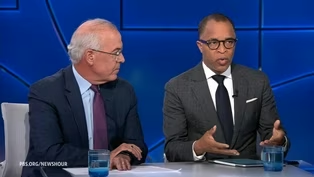
Brooks and Capehart on tariff ruling and Trump's attacks
Video has Closed Captions
Clip: 2/20/2026 | 9m 47s | Brooks and Capehart on the tariff ruling and Trump's attacks on Supreme Court justices (9m 47s)

Business owner who challenged tariffs responds to ruling
Video has Closed Captions
Clip: 2/20/2026 | 4m 32s | Business owner who challenged Trump's tariffs reacts to Supreme Court decision (4m 32s)
EPA rollbacks could raise health care costs, advocates warn
Video has Closed Captions
Clip: 2/20/2026 | 5m 31s | EPA rollbacks on pollution limits could drive up health care costs, advocates warn (5m 31s)

News Wrap: Ex-prince's former home searched after arrest
Video has Closed Captions
Clip: 2/20/2026 | 7m 2s | News Wrap: Ex-prince's former home searched a day after his arrest (7m 2s)

Palestinians in Gaza observe Ramadan amid destruction
Video has Closed Captions
Clip: 2/20/2026 | 3m 31s | Palestinians in Gaza observe Ramadan despite enormous destruction and loss (3m 31s)

Trump suggests limited strikes to push Iran to nuclear deal
Video has Closed Captions
Clip: 2/20/2026 | 4m 4s | Trump suggests limited strikes to push Iran to nuclear deal (4m 4s)
What's next for consumers after Supreme Court tariff ruling
Video has Closed Captions
Clip: 2/20/2026 | 5m 17s | What's next for consumers and the economy after the Supreme Court's tariff ruling (5m 17s)
Why the Supreme Court ruled against Trump's tariffs
Video has Closed Captions
Clip: 2/20/2026 | 5m 49s | Why the Supreme Court ruled against Trump's tariffs (5m 49s)
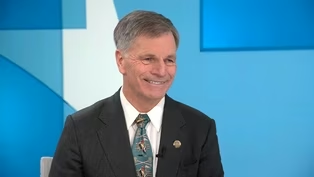
Wyoming Gov. Gordon on tariffs, energy and the environment
Video has Closed Captions
Clip: 2/20/2026 | 6m 30s | Wyoming Gov. Gordon on tariffs, energy and environmental stewardship (6m 30s)
Providing Support for PBS.org
Learn Moreabout PBS online sponsorship
- News and Public Affairs

FRONTLINE is investigative journalism that questions, explains and changes our world.

- News and Public Affairs

Amanpour and Company features conversations with leaders and decision makers.












Support for PBS provided by:
Major corporate funding for the PBS News Hour is provided by BDO, BNSF, Consumer Cellular, American Cruise Lines, and Raymond James. Funding for the PBS NewsHour Weekend is provided by...