
How the Associated Press tracks results on Election Night
Clip: 10/28/2026 | 3m 30sVideo has Closed Captions
How the Associated Press tracks and calls races on Election Night
Nearly 40 million votes have already been cast for races that will determine not only who controls Congress, but also governors, mayors and city councils. For many years, PBS News has relied on the Associated Press to keep track of results, and we will again next Tuesday. Deema Zein takes a closer look at how the AP counts the vote.
Problems playing video? | Closed Captioning Feedback
Problems playing video? | Closed Captioning Feedback
Major corporate funding for the PBS News Hour is provided by BDO, BNSF, Consumer Cellular, American Cruise Lines, and Raymond James. Funding for the PBS NewsHour Weekend is provided by...
How the Associated Press tracks results on Election Night
Clip: 10/28/2026 | 3m 30sVideo has Closed Captions
Nearly 40 million votes have already been cast for races that will determine not only who controls Congress, but also governors, mayors and city councils. For many years, PBS News has relied on the Associated Press to keep track of results, and we will again next Tuesday. Deema Zein takes a closer look at how the AP counts the vote.
Problems playing video? | Closed Captioning Feedback
Where to Watch PBS News Hour
PBS News Hour is available to stream on pbs.org and the PBS app.
Providing Support for PBS.org
Learn Moreabout PBS online sponsorshipGEOFF BENNETT: Nearly 40 million votes have already been cast ahead of Election Day.
And that's for races that will determine not only who controls Congress, but also governors, mayors, and city councils.
AMNA NAWAZ: For many years, PBS News has relied on the Associated Press to keep track of results.
And we will do so again next Tuesday.
Deema Zein takes a closer look at how AP counts the vote.
DEEMA ZEIN: Elections are run and ballots are counted by thousands of local jurisdictions across the country.
The Associated Press is tracking results in thousands of races.
Knowing how many voters actually showed up is critical to knowing when a race is over.
To explain what it takes to count the vote, I'm joined by David Scott, vice president of election services at the Associated Press.
David, thank you for joining me.
DAVID SCOTT, Vice President of Election Services, Associated Press: Happy to be here.
DEEMA ZEIN: So I want to jump right in.
Election Day is a big operation.
How many races are you tracking?
DAVID SCOTT: So in this year's general election, we will tabulate close to 7,000 races across national races for Congress, state legislative races, local races for mayor, some city council, some school board.
So it's an enormous effort.
DEEMA ZEIN: And, as we said, elections are locally run.
So how many people does it take for AP to gather results?
And is this done in person, online, both?
DAVID SCOTT: Both, all.
Wherever we can get vote count, we're looking for it.
And that's actually one of the hallmarks of what we do is multiple sources.
So we will employ.
4,000 stringers this year, reporters essentially, who go to local election offices and wait for results to be posted or they talk to election officials as they are releasing ballots.
We also know that those results are posted online in many places.
Some states and some counties have electronic feeds.
So we are looking wherever we can get those and we take all that data and we match it up.
Is what the stringer is hearing from election officials, the same things on the Web site?
It adds a layer of accuracy to our vote count and to what we're reporting on election night.
We like to say that what we do at AP on election night is the single largest act of journalism there is.
Now, there's lots of big stories, but there will be close to 5,000 people working for AP on this election night, all trying to answer that question of who of Americans picked to lead.
DEEMA ZEIN: Wow.
And as you're tracking these results in calling races, you're also estimating the number of votes cast.
So I want to ask, how do you determine the actual size of the electorate?
DAVID SCOTT: It's a big math problem, right, because we don't know in advance, but we get a lot of help from election officials.
So, in many states, they say ahead of time how many advanced ballots have been returned, how many have been cast.
On the day of election, many states, many counties will post details or tell our reporters, this is how many people have voted at the polling place on Election Day.
And so we use that information, that data to make an estimate of how many people have voted and what the turnout will be in every race.
DEEMA ZEIN: How have the elections now changed over the years, in both how people have voted and how you count the vote?
DAVID SCOTT: Well, the biggest change is that people vote before Election Day.
1972, 95 percent of Americans voted at their neighborhood polling place on Election Day.
And that number is now less than 50 percent.
A lot of people, most people are voting before Election Day.
The biggest change has been the rise of mail balloting, early in-person voting, just the different ways that you can cast a ballot.
DEEMA ZEIN: David Scott, vice president of election services at the Associated Press, thank you for joining us.
DAVID SCOTT: Happy to be here.
AMNA NAWAZ: And we will have those live election results next Tuesday, November 3.
Join us and our reporters and our panel of experts for analysis as the votes are counted.
Our coverage begins at 7:00 p.m.
Eastern.
 New
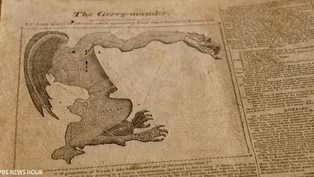
America's long history of gerrymandering
Video has Closed Captions
America's long history of gerrymandering and its role in this year's midterms (9m 41s)
 New
Brazil's Flávio Bolsonaro flees to U.S. after election loss
Video has Closed Captions
Brazil's Flávio Bolsonaro flees to U.S. after election loss (5m 29s)
 New
Democratic and GOP strategists assess midterm landscape
Video has Closed Captions
Democratic and GOP strategists assess midterm landscape in final week (7m 47s)
 New
News Wrap: Fed holds interest rates unchanged
Video has Closed Captions
News Wrap: Fed holds interest rates unchanged as inflation remains elevated (5m 1s)
 New
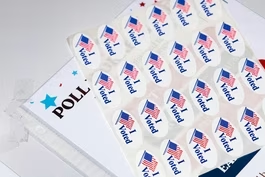
Polls suggest surprising Democratic gains in red-state races
Video has Closed Captions
New polls suggest surprising Democratic gains in red-state Senate races (3m 43s)
 New
Remembering pioneering labor leader and civil rights icon Dolores Huerta
Video has Closed Captions
Remembering pioneering labor leader and civil rights icon Dolores Huerta (5m 45s)
 New
Shock, anger and mourning in Spain after train crash
Video has Closed Captions
Shock, anger and mourning in Spain after 2nd major train crash this year (2m 26s)
 New
What's next for Israel after election produces gridlock
Video has Closed Captions
What's next for Israel after election produces political gridlock (4m 35s)
 New
Where key Senate races stand in final days of campaigning
Video has Closed Captions
Where key Senate races stand in the final days of campaigning (3m 18s)
Providing Support for PBS.org
Learn Moreabout PBS online sponsorship
- News and Public Affairs

FRONTLINE is investigative journalism that questions, explains and changes our world.
 New Episode
- News and Public Affairs

Today's top journalists discuss Washington's current political events and public affairs.
 New Episode


 New Episode

 New Episode
 New Episode

 New Episode



Support for PBS provided by:
Major corporate funding for the PBS News Hour is provided by BDO, BNSF, Consumer Cellular, American Cruise Lines, and Raymond James. Funding for the PBS NewsHour Weekend is provided by...